
Polska wersja

PLANT PROFILE
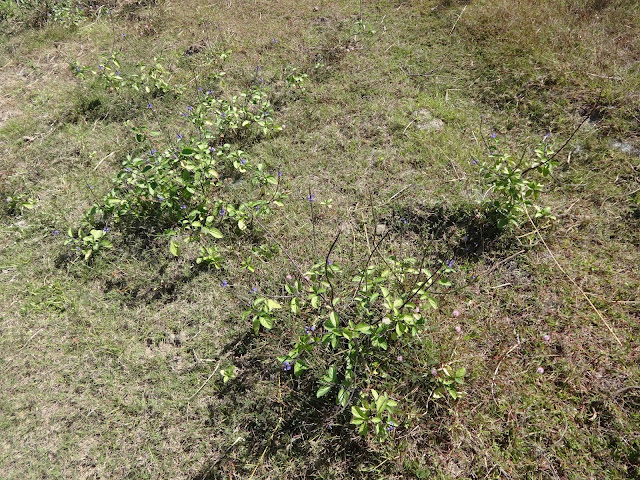
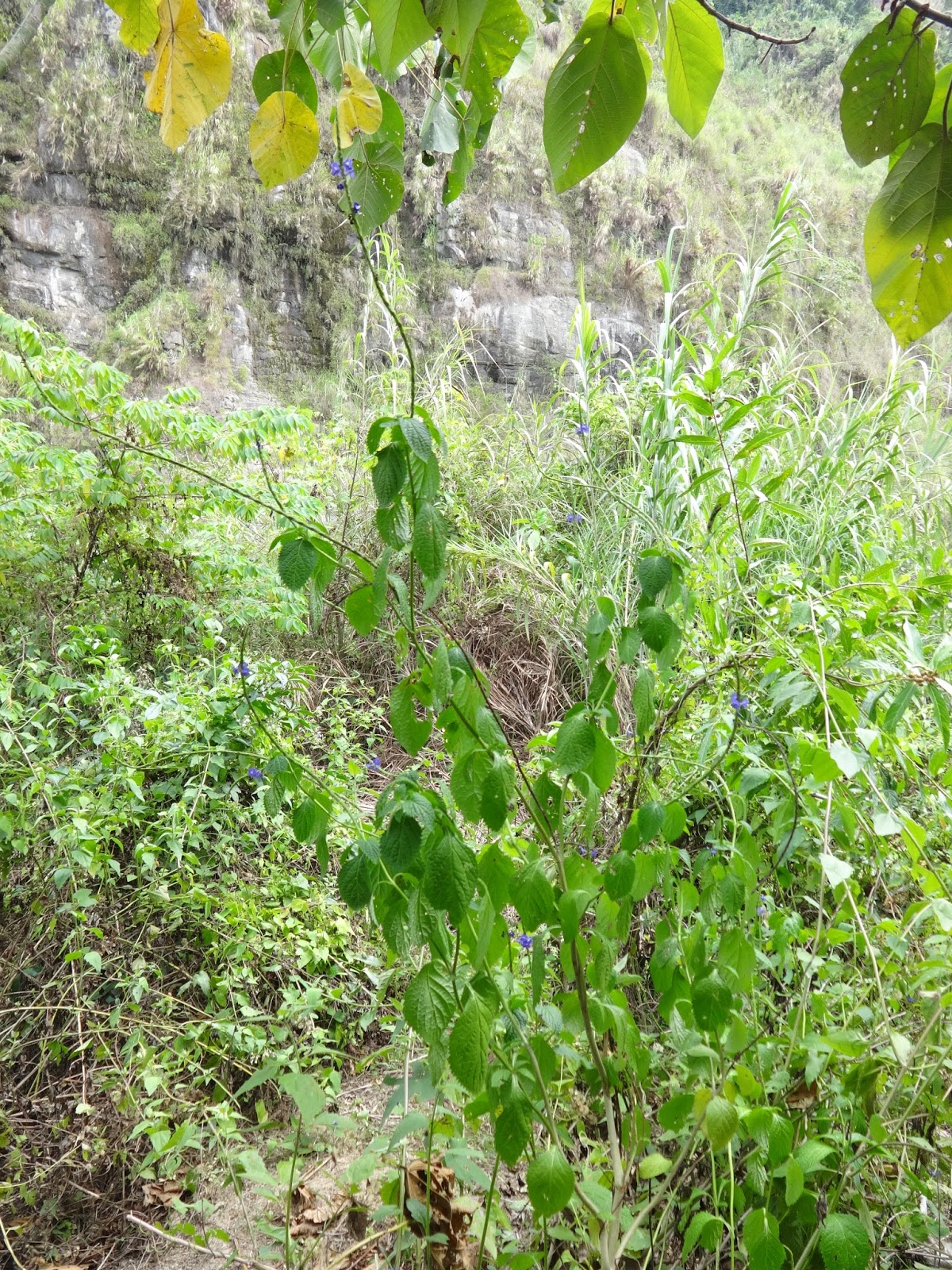
Stachytarpheta is a small perennial that often appear as just annual herb. It is panatropical, which means it grows all around tropics, and it also can be found in many warm climate regions, but is said to originate from South and Central America. When I first saw this plant growing wild ( in north of the Philippines, where all those photos that I've put here were shot by me ), I have thought that it has to be tropical variety of Vervain ( Verbena officinalis ), and therefore had put much interest on it. Vervain is quite popular herb from Europe, highly esteemed for its many medicinal values. Both plants share same structure of stems and flowers, except that Stachytarpheta have usually wider, toothed but not lobbed leaves, and generally grows bigger and more robust. In fact Verbena name is one of the synonyms for Stachytarpheta spiecies, and one of its common names are Bastard Vervain and Wild Verbena. And so I've found out that Verbena officinalis and Stachytarpheta cayennensis and jamaicensis indeed share also some of its main medicinal values.
A tea made from leaves of S. cayennensis was popular drink in Brasil, and when it reached USA markets it was called Brazilian Tea. It was also added to adulterate Chinese Tea. In Maya's tradition Stachytarpheta is considered as a sacred plant, used to rid of possession by evil spirits. It was brought to cultivation in Asia at the end of 18th century. Stachytarpheta medicinal use traditions seems to develop independently in many distant lands like Jamaica, Brasil, Nigeria, India, Indonesia and Japan. Its apperance in so many areas, very remote from each other, have caused chaos in scientific nomenclature. Since plants that you can see here on photos have the same medicinal values, for which are used interchangeably. Look very similar and easily crosspolinate creating it's hybrids and hybrids of the hybrids. It is of minor importance, what name we will stick to certain plant of those. But from all gathered opinions about right classification and outlook of those plants, the only reasonable segregation for me, is separation into broad leaf and narrow leaf species (but even that might be hard as young robust plants and those on fertile soil, have much bigger leaves, while old plants and those from poor soil will look much different even if both share same genes).
Therefore I consider broad leaf plants, with leaves with shape reminding leaves of Nettle, to share synonyms of Stachytarpheta urticifolia and Stachytarpheta cayennensis. There are many more synonyms of this species like Verbena salisburi, Zappania urticifolia or Cymburus urticifolius, but these have no importance nowadays.
The second type is narrow leaved one, with synonyms Stachytarpheta jamaicensis and Stachytarpheta indica. And this species has as well many other synonyms that are out of use, like Valerianoides jamaicense, Verbena americana, Vermicularia deccurens and Zappania jamaicensis. Name Stachytarpheta indica is often used for both of those types as some respected authors claim it to be synonym for S. cayennensis and S. urticifolia, while others called it synonym for S. jamaicensis. Some people even sais Stachytarpcheta urticifolia to be synonym for S. jamaicensis and S. jamaicensis to be synonym of S. cayenensis.
Some of those plants differ also for not having blue, but white flowers. And there are also distinct red or pink flower species from south of North America, called Stachytarpheta mutabilis and S, sanguinea. These are the most often selled plants, of species of Stachytarpheta in nurseries for ornamental purposes, but blue varieties are also appreciated for its look and cultivated in gardens. I've never seen these plants in Europe, and surely it wouldn't survive in any gardens in north during winter. But even though I didn't found any reports of using it as a house plant, I think that it would be easy to maintain in pots indoor an also that it has good potential for shaping into bonsai.
 Both broad and narrow leaf varieties of blue Stachytarpheta share common names like : Porterweed, Blue Porterweed, Brazilian Tea, Snakeweed, Bastard Vervain, Blue Verbena, Verbena Cimarrona, Rat Tail, Horse Whip and Aaron's Rod which seem to be popular common name for this plant but it is also used for other plants mainly for Verbascum species.
And here are Stachytarpheta common names in some other languages : Golondrina, Verbena azul, Piche de Gato (in Spanish), Gervao (Brazilian), Jia ma bian (Chinese), Verveine queue de rat, Herbe a Chenille, Verveine laquerot (French), Oi, Owi (Hawaiian), Nagaboso, Honagaso (Japanese), Louch Beluu (Palauan), Mautofu tala (Samoan), Biron, Karomenal, Jarong (Javanese), Tiaki (Maori), Tsarkiyarkuusuu (Hausa, Nigeria), Agogo Igun (Yoruba, Nigeria), Kariyartharani (Hindi), Seemakongini, Kattupunnuthu, Narivalan (Malayalam), Seemainaayuruvi (Tamil), Kandikandilaan (Tagalog), Bolos Moros (Bikul), Albaka (Panay Bisaya), Mo Mi Scha (Cambodia),
 CULTIVATION AND HARVESTING
Porterweed is a tropical shrub that is short lived perrenial, that also appear as an annual in climates with cold or very dry year season. Stachytarpheta jamaicensis usually create wide small shrub up to around 80cm hight and even over 1m width, while Stachytarpheta cayennensis is more robust and can reach well over 1,5 m height. But like I've mentioned above it is hard to distinguish those two species and their many hybrids that often dominate the landscape. And a lot of it's appearance depend on soil and climate conditions too. It's leaves can be from 2 to 10cm long and around 1 to 5cm width.
Stachytarpheta has a great adaptation skills. It can grow in moist rich soils in partial shade (where it is thriving best), acidic soil under strong pine trees shade, on poor, dry, sandy ground under scorching sun and even in saline soils. It can withstand strong heat, but temperatures below 0'C are lethal for Porterweed. With enough supply of water it is fast growing and produce flowers all year round. It is generally free of pests. Stachytarpcheta can be propagated by seeds or from cuttings. Is is reported to be invasive species in Florida. The plant is also good nectar producer, that is attracting beautiful butterflies to the gardens. Whole stems with leaves and flowers can be gatchered at any time (as long as plant is already strong enough and you will leave enough foliage on it), but you can also pick separate leaves and flower stems, saving stems to grow new leaves soon.
CULINARY USES
All parts of Stachytarpheta cayennensis/jamaicensis can be used dried or fresh to make pleasantly tasting infusion called Brazilian Tea. It is also said to be used for brewing foaming drink, similar to Porter kind of beers and thats where the name Porterweed is taken from. It's tiny flowers are edible, it has a bit of mushroom taste and can be used raw as a spice for salads. Other parts of plant are said to be eaten in some regions, boiled as a vegetable, but can be toxic if consumed raw. Whole long flowerspikes are used for flavoring in same way as Bay Leaf.
 MEDICINAL USES
Porterweed is used in traditional medicine of many distant, mostly tropical countries from Brasil through Ghana, Nigeria, India, Indonesia, the Philippines to Japan and Hawaii. This herb has so many health benefits that in Dominica decoctions of it is drunk as a cure-all. In recent years there have been many laboratory tests conducted, mostly in India, Nigeria and Brasil, but also in many other countries like Malaysia and Panama. Effects of which confirmed not only medicinal properties of Stachytarpheta, but also that plants with given names of S. cayennensis, S. jamaicensis, S. indica and S. urticifolia can be all treated alike, as it's chemical characteristics are just as closely similar as its looks. It contain : flavonoids (scuttelarein, luteolol 7-glucuronide, apigenol 7-glucuronide, hopidulin, hispidulin), triterpenes (lanostane triterpenoids, pentacyclic friedelin and ursolic acid), monoterpenes (iridoids), sesquiterpenes, steroids, sterols (alfa-stigmasterol, alpha-spinasterol), isosterols, tannins (catechuic tannins), dopamine, glycosides (steroidal glycosides, lantosane glucosides, phentylthanoid glycosides, iridoid glycoside - tarphetalin, stachytarphine), choline, phenolic acids (salicylic acid), chlorogenic acid, alkaloids (ipolamide, beta-hydroxyipolamide, verbascoside (aka acetoside)), saponins, carbohydrates, proteins, amino acids, butyric acid, citral, geraniol. nonacosanen, pentriacontane, triacontanen, tritricontanen and tetratricontanen. Leaves and stems of Stachytarpheta also contain hydrogen cyanide, which is toxic and therefore it should not be consumed in its fresh form, but only in form of decoctions, infusions, tinctures, pills or capsules. All parts of the plant, including roots are used to made these preparations.
Medicinal actions of Porterweed are : anti-inflammatory, antiulcerous, anti-diarrheal, antibacterial, antiviral, antispasmodic (but there are some claims about it to be spasmogenic), anticonvulsant, analgesic (antinociceptive - reduces sensitivity to pain, neurasthemic - reduces nerve pain), sedative, antiplasmodial, antioxidant, detoxyfying, hepatoprotective, cardio-protective, neuroprotective, vulnerary, hypotensive, febrifuge, diaphoretic, expectorant, anti-anaphylatic (reduces allergic reactions), anti-diabetic, stomachic, gastrotonic, antacid, cholagogue, abortifacient, antitumor, anti-asthmatic, bronchidilator, diuretic (antilithiasis), oxytocic, mildly laxative, cooling, galactogogue, vasodilator, antihelmitic, emmenagogue, immunomodulatory, and act as inhibitor of histamine and bradykynin. Some sources are mentioning its emetic and purgative action but to my knowledge and experience with use of this herb I only see possibility for pure raw material to act in such a drastic way if eaten fresh.
- used for many kind of respiratory problems like allergic respiratory conditions, cough, asthma and bronchitis
- for all kinds of inflammation including pharyngitis, eczema and rheumatism
- it depress central nervous system, act as a sedative, anxiolytic, antipsychotic, and is used for neuralgia, nervous disorders, nervousness, stress, anxiety, migranes, depression, insomnia and as a nerve tonic. In Ghana, leaf extract is employed for the management of mental illness.
- it relieves pain (by acting in both central and peripheral pathways as a analgesic, and antiinflammatory agent), elevate pain treshold, and is used for many types of pain from headache, body ache, rheumatic and arthric pains, painful joints, also as a antispasmodic it is used to relieve cramps
- it protects liver and is consumed for hepatitis and cirrhosis, effectivenes of Stachytarpheta in liver protection is proved to be comparable to Liv-52 drug
- it is said to promote production of bile and in the same time reduce acidity level in stomach. It is widely used for stomach and bowels complains like : heartburn, ulcers, acid reflux, nausea, indigestion, flatulence, bacterial infections, diarrhoea, constipation, poisoning
- stimulate urination and improve kidney functions, therefore is used for many ailments like water retention, dropsy, urinary tract infections, stones, oliguria,
- it is used for human worms like ascaris
- used extensively for women complaints like many types of menstrual disorders, to promote menstruation (in amenorrhoea), to regulate hormones, ease menopausal symptoms, stop dysmenorrhea (painful periods), vaginal discharge, to increase milk production in nursing mothers, the tea is drink by women after childbirth to restore the uterus to its position and restore health and strength, decoction of roots is used to cause abortion
- to treat veneral diseases like gonorrhea, syphylis,
- externaly decoctions and infusions are used to wash skin inflammations and alergic iritations, wounds and cuts (it increases level of collagen), ulcers, pyoderma, erysipelas, leucoderma, vitiligo, alopecia, smashed leaves are applied as a poultice on wounds, sores, ulcers, boils, sprains and bruises, also dried powdered leaves are used as a styptic for wounds
- fresh juice is used as eyewash for inflammations, conjuctivitis, trachoma, ophtalmia and against cataract, it is also applied on ear-sores
- it is also mentioned to be used for tumors




Sources
'' Toxicological Survey of African Medicinal Plants '' - Victor Kuete, Elsevier 2022
'' International Coalition of Traditional and Folk Medicine, Northeast Asia part III '' - Chung Ki Sung, Takeatsu Kimura, Paul P.H. Butt, World Scientific 1998
'' Caribbean Healing Traditions : Implications for Health and Mental Health '' - Patsy Sutherland, Roy Moodley, Routledge 2022
'' Guide to Afro-Cuban Herbalism '' - Dalia Quiros-Moran, AuthorHouse 2009
'' Duke's Handbook of Medicinal Plants of Latin America '' - James A. Duke, CRC Press 2008
'' Outlines and Pictures of Medicinal Plants of Nigeria '' - Tolu Odugbemi, Tolu Odugbemi 2008
'' Medicinal Plants of the World, volume 3 '' - Ivan A. Ross, Springer Science & Buisness Media 2007
'' Taiwanese Native Medicinal Plants '' - Thomas S. C. Li, CRC Press 2006
'' CRC World Dictionary of Medicinal and Poisonous Plants '' - Umberto Quattrocchi, CRC Press 2012
'' Medicinal Plants of the Philippines '' - dr. Eduardo Quisumbing, Katha Publishing 1978
'' African Ethnobotany in the Americas '' - Robert Voeks, John Rashford, Springer Science and Business Media 2012
'' Amazing Healing Plants '' - J.C. Kurian, J.C. Kurian 2010
http://www.rain-tree.com/gervao.htm#.VpTTo_mLTIV
http://pinellas.fnpschapters.org/index.php?id=porterweeds
http://www.ethnoleaflets.com/leaflets/idumerod.htm
http://www.ijabpt.org/applied-biology/leaf-epidermal-studies-in-the-species-of-stachytarpheta-found-in-awkanigeria-and-its-taxonomic-implications.php?aid=6597
http://www.nybg.org/files/scientists/mbalick/Dominican%20Medicinal%20Plants_2nd%20Edition%20Manuscript%202110.pdf
http://lee.ifas.ufl.edu/Hort/GardenPubsAZ/Blue_porterweed.pdf
http://collier.ifas.ufl.edu/CommHort/CommHortPubs/BluePorterweed.pdf
http://www.mpbd.info/plants/stachytarpheta-indica.php
http://ip.aaas.org/tekindex.nsf/2a9c4e44835b04ea85256a7200577a64/e81c86e86a66c11385256af0006b4aee/Body/M1
http://plantsforuse.com/index.php?page=1&id=3158
http://herbpathy.com/Uses-and-Benefits-of-Stachytarpheta-Jamaicensis-Cid4579
http://www.ngrguardiannews.com/2021/02/natural-remedies-for-sleeplessness-unveiled/
http://www.saintlucianplants.com/localuses/stachyta.html
http://www.globinmed.com/index.php?option=com_content&view=article&id=62902:stachytarpheta-jamaicensis-l-vahl&catid=383:s
http://www.stuartxchange.com/Kandikandilaan.html
http://ertapuri.blogspot.com/2011/05/little-bit-about-stachytarpheta.html
http://www.tropilab.com/verbena.html
http://www.eattheweeds.com/blue-porterweed-bottom-up/
https://en.wikipedia.org/wiki/Stachytarpheta_cayennensis
https://en.wikipedia.org/wiki/Stachytarpheta_jamaicensis
http://www.jaherbs.com/index.php?option=com_content&view=article&id=78:vervine-&catid=25:the
http://www.hear.org/Pier/species/stachytarpheta_jamaicensis.htm
http://pelagiaresearchlibrary.com/der-chemica-sinica/vol1-iss2/DCS-2010-1-2-6-14.pdf
http://sphinxsai.com/CTVOL4/ct_pdf_vol_4/CT=40%20(1043-1047).pdf
http://www.ijidd.com/File_Folder/31-37.pdf
http://www.bioline.org.br/request?ph08037
http://www.ijrap.net/admin/php/uploads/278_pdf.pdf
http://scialert.net/fulltext/?doi=tmr.2007.193.198
http://idosi.org/gjp/6(1)12/2.pdf
http://bmrjournals.com/journals/Manuscript/164/Phytochemical-screening-and-bioevaluation-of-medicinal-plant-Stachytarpheta-indica(L%20)Vahl
http://maxwellsci.com/print/bjpt/v6-16-21.pdf
http://bmccomplementalternmed.biomedcentral.com/articles/10.1186/1472-6882-14-376
http://www.jscimedcentral.com/PlantBiology/plantbiology-3-1027.pdf
http://www.ncbi.nlm.nih.gov/pubmed/19494533
http://eprints.utm.my/12715/
http://tropical.theferns.info/viewtropical.php?id=Stachytarpheta+indica
http://tropical.theferns.info/viewtropical.php?id=Stachytarpheta+cayennensis
http://tropical.theferns.info/viewtropical.php?id=Stachytarpheta+jamaicensis
https://www.researchgate.net/publication/280736408_Invitro_Culture_of_Stachytarpheta_jamaicensis_L_Vahl_An_Important_Medicinal_Plant
http://www.readcube.com/articles/10.1590%2FS0102-695X2008000400003
http://ntutcm.wikifoundry.com/page/Stachytarpheta+jamaicensis
http://www.ijirset.com/upload/2022/july/7_Anti.pdf
http://www.japsonline.com/admin/php/uploads/1606_pdf.pdf
http://www.irjponline.com/admin/php/uploads/vol-issue3/42.pdf
http://scholarsresearchlibrary.com/dpl-vol5-iss2/DPL-2022-5-2-193-200.pdf
http://cabdirect.org/abstracts/20093177932.html;jsessionid=8D71D9659F7714F7293BD0BF00201FFB;jsessionid=D3160779B8BA80A55F33F3D9F8AEA351
http://wgbis.ces.iisc.ernet.in/biodiversity/sahyadri_enews/newsletter/issue42/bibliography/Ethno-medicinal-knowledge-of-Lambani-community-in-Chikmagalur-district-of-Karnataka.pdf
http://nopr.niscair.res.in/bitstream/123456789/13519/1/IJBT%2011(1)%20105-107.pdf
https://www.thieme-connect.com/products/ejournals/abstract/10.1055/s-2006-949893
http://www.ijppsjournal.com/Vol6Issue1/8114.pdf
http://www.ijp-online.com/article.asp?issn=0253-7613;year=2007;volume=39;issue=5;spage=245;epage=248;aulast=Sasidharan
http://sphinxsai.com/2022/pharmAJ13/pdf/PT=39(577-582)AJ13.pdf
http://eol.org/pages/579751/names/common_names
http://docsdrive.com/pdfs/ansinet/ijp/2006/163-165.pdf

PLANT PROFILE
Stachytarpheta is a small perennial that often appear as just annual herb. It is panatropical, which means it grows all around tropics, and it also can be found in many warm climate regions, but is said to originate from South and Central America. When I first saw this plant growing wild ( in north of the Philippines, where all those photos that I've put here were shot by me ), I have thought that it has to be tropical variety of Vervain ( Verbena officinalis ), and therefore had put much interest on it. Vervain is quite popular herb from Europe, highly esteemed for its many medicinal values. Both plants share same structure of stems and flowers, except that Stachytarpheta have usually wider, toothed but not lobbed leaves, and generally grows bigger and more robust. In fact Verbena name is one of the synonyms for Stachytarpheta spiecies, and one of its common names are Bastard Vervain and Wild Verbena. And so I've found out that Verbena officinalis and Stachytarpheta cayennensis and jamaicensis indeed share also some of its main medicinal values.
A tea made from leaves of S. cayennensis was popular drink in Brasil, and when it reached USA markets it was called Brazilian Tea. It was also added to adulterate Chinese Tea. In Maya's tradition Stachytarpheta is considered as a sacred plant, used to rid of possession by evil spirits. It was brought to cultivation in Asia at the end of 18th century. Stachytarpheta medicinal use traditions seems to develop independently in many distant lands like Jamaica, Brasil, Nigeria, India, Indonesia and Japan. Its apperance in so many areas, very remote from each other, have caused chaos in scientific nomenclature. Since plants that you can see here on photos have the same medicinal values, for which are used interchangeably. Look very similar and easily crosspolinate creating it's hybrids and hybrids of the hybrids. It is of minor importance, what name we will stick to certain plant of those. But from all gathered opinions about right classification and outlook of those plants, the only reasonable segregation for me, is separation into broad leaf and narrow leaf species (but even that might be hard as young robust plants and those on fertile soil, have much bigger leaves, while old plants and those from poor soil will look much different even if both share same genes).
Therefore I consider broad leaf plants, with leaves with shape reminding leaves of Nettle, to share synonyms of Stachytarpheta urticifolia and Stachytarpheta cayennensis. There are many more synonyms of this species like Verbena salisburi, Zappania urticifolia or Cymburus urticifolius, but these have no importance nowadays.
The second type is narrow leaved one, with synonyms Stachytarpheta jamaicensis and Stachytarpheta indica. And this species has as well many other synonyms that are out of use, like Valerianoides jamaicense, Verbena americana, Vermicularia deccurens and Zappania jamaicensis. Name Stachytarpheta indica is often used for both of those types as some respected authors claim it to be synonym for S. cayennensis and S. urticifolia, while others called it synonym for S. jamaicensis. Some people even sais Stachytarpcheta urticifolia to be synonym for S. jamaicensis and S. jamaicensis to be synonym of S. cayenensis.
Some of those plants differ also for not having blue, but white flowers. And there are also distinct red or pink flower species from south of North America, called Stachytarpheta mutabilis and S, sanguinea. These are the most often selled plants, of species of Stachytarpheta in nurseries for ornamental purposes, but blue varieties are also appreciated for its look and cultivated in gardens. I've never seen these plants in Europe, and surely it wouldn't survive in any gardens in north during winter. But even though I didn't found any reports of using it as a house plant, I think that it would be easy to maintain in pots indoor an also that it has good potential for shaping into bonsai.
 Both broad and narrow leaf varieties of blue Stachytarpheta share common names like : Porterweed, Blue Porterweed, Brazilian Tea, Snakeweed, Bastard Vervain, Blue Verbena, Verbena Cimarrona, Rat Tail, Horse Whip and Aaron's Rod which seem to be popular common name for this plant but it is also used for other plants mainly for Verbascum species.
And here are Stachytarpheta common names in some other languages : Golondrina, Verbena azul, Piche de Gato (in Spanish), Gervao (Brazilian), Jia ma bian (Chinese), Verveine queue de rat, Herbe a Chenille, Verveine laquerot (French), Oi, Owi (Hawaiian), Nagaboso, Honagaso (Japanese), Louch Beluu (Palauan), Mautofu tala (Samoan), Biron, Karomenal, Jarong (Javanese), Tiaki (Maori), Tsarkiyarkuusuu (Hausa, Nigeria), Agogo Igun (Yoruba, Nigeria), Kariyartharani (Hindi), Seemakongini, Kattupunnuthu, Narivalan (Malayalam), Seemainaayuruvi (Tamil), Kandikandilaan (Tagalog), Bolos Moros (Bikul), Albaka (Panay Bisaya), Mo Mi Scha (Cambodia),
 CULTIVATION AND HARVESTING
Porterweed is a tropical shrub that is short lived perrenial, that also appear as an annual in climates with cold or very dry year season. Stachytarpheta jamaicensis usually create wide small shrub up to around 80cm hight and even over 1m width, while Stachytarpheta cayennensis is more robust and can reach well over 1,5 m height. But like I've mentioned above it is hard to distinguish those two species and their many hybrids that often dominate the landscape. And a lot of it's appearance depend on soil and climate conditions too. It's leaves can be from 2 to 10cm long and around 1 to 5cm width.
Stachytarpheta has a great adaptation skills. It can grow in moist rich soils in partial shade (where it is thriving best), acidic soil under strong pine trees shade, on poor, dry, sandy ground under scorching sun and even in saline soils. It can withstand strong heat, but temperatures below 0'C are lethal for Porterweed. With enough supply of water it is fast growing and produce flowers all year round. It is generally free of pests. Stachytarpcheta can be propagated by seeds or from cuttings. Is is reported to be invasive species in Florida. The plant is also good nectar producer, that is attracting beautiful butterflies to the gardens. Whole stems with leaves and flowers can be gatchered at any time (as long as plant is already strong enough and you will leave enough foliage on it), but you can also pick separate leaves and flower stems, saving stems to grow new leaves soon.
CULINARY USES
All parts of Stachytarpheta cayennensis/jamaicensis can be used dried or fresh to make pleasantly tasting infusion called Brazilian Tea. It is also said to be used for brewing foaming drink, similar to Porter kind of beers and thats where the name Porterweed is taken from. It's tiny flowers are edible, it has a bit of mushroom taste and can be used raw as a spice for salads. Other parts of plant are said to be eaten in some regions, boiled as a vegetable, but can be toxic if consumed raw. Whole long flowerspikes are used for flavoring in same way as Bay Leaf.
 MEDICINAL USES
Porterweed is used in traditional medicine of many distant, mostly tropical countries from Brasil through Ghana, Nigeria, India, Indonesia, the Philippines to Japan and Hawaii. This herb has so many health benefits that in Dominica decoctions of it is drunk as a cure-all. In recent years there have been many laboratory tests conducted, mostly in India, Nigeria and Brasil, but also in many other countries like Malaysia and Panama. Effects of which confirmed not only medicinal properties of Stachytarpheta, but also that plants with given names of S. cayennensis, S. jamaicensis, S. indica and S. urticifolia can be all treated alike, as it's chemical characteristics are just as closely similar as its looks. It contain : flavonoids (scuttelarein, luteolol 7-glucuronide, apigenol 7-glucuronide, hopidulin, hispidulin), triterpenes (lanostane triterpenoids, pentacyclic friedelin and ursolic acid), monoterpenes (iridoids), sesquiterpenes, steroids, sterols (alfa-stigmasterol, alpha-spinasterol), isosterols, tannins (catechuic tannins), dopamine, glycosides (steroidal glycosides, lantosane glucosides, phentylthanoid glycosides, iridoid glycoside - tarphetalin, stachytarphine), choline, phenolic acids (salicylic acid), chlorogenic acid, alkaloids (ipolamide, beta-hydroxyipolamide, verbascoside (aka acetoside)), saponins, carbohydrates, proteins, amino acids, butyric acid, citral, geraniol. nonacosanen, pentriacontane, triacontanen, tritricontanen and tetratricontanen. Leaves and stems of Stachytarpheta also contain hydrogen cyanide, which is toxic and therefore it should not be consumed in its fresh form, but only in form of decoctions, infusions, tinctures, pills or capsules. All parts of the plant, including roots are used to made these preparations.
Medicinal actions of Porterweed are : anti-inflammatory, antiulcerous, anti-diarrheal, antibacterial, antiviral, antispasmodic (but there are some claims about it to be spasmogenic), anticonvulsant, analgesic (antinociceptive - reduces sensitivity to pain, neurasthemic - reduces nerve pain), sedative, antiplasmodial, antioxidant, detoxyfying, hepatoprotective, cardio-protective, neuroprotective, vulnerary, hypotensive, febrifuge, diaphoretic, expectorant, anti-anaphylatic (reduces allergic reactions), anti-diabetic, stomachic, gastrotonic, antacid, cholagogue, abortifacient, antitumor, anti-asthmatic, bronchidilator, diuretic (antilithiasis), oxytocic, mildly laxative, cooling, galactogogue, vasodilator, antihelmitic, emmenagogue, immunomodulatory, and act as inhibitor of histamine and bradykynin. Some sources are mentioning its emetic and purgative action but to my knowledge and experience with use of this herb I only see possibility for pure raw material to act in such a drastic way if eaten fresh.
All those actions of Stachytarpheta cayennensis/jamaicensis mentioned above are the reason
why it is widely used in many different systems of traditional medicine for following ailments :
- diabetes, hypertension, congestive heart failure, muscular dystrophy, also drunk as a cooling tonic and blood cleanser
- it is commonly used for many kinds of infections (including amebic) like cold, flu, cholera, dysentery, malaria, yellow fever as it is not only antimicrobial but also reduces fever and promotes perspiration (also used for anhidrosis). I myself had used decoction of fresh stems with leaves of Stachytarpheta and Bougainvillea, when I had dengue fever and it cured me immediately.why it is widely used in many different systems of traditional medicine for following ailments :
- diabetes, hypertension, congestive heart failure, muscular dystrophy, also drunk as a cooling tonic and blood cleanser
- used for many kind of respiratory problems like allergic respiratory conditions, cough, asthma and bronchitis
- for all kinds of inflammation including pharyngitis, eczema and rheumatism
- it depress central nervous system, act as a sedative, anxiolytic, antipsychotic, and is used for neuralgia, nervous disorders, nervousness, stress, anxiety, migranes, depression, insomnia and as a nerve tonic. In Ghana, leaf extract is employed for the management of mental illness.
- it relieves pain (by acting in both central and peripheral pathways as a analgesic, and antiinflammatory agent), elevate pain treshold, and is used for many types of pain from headache, body ache, rheumatic and arthric pains, painful joints, also as a antispasmodic it is used to relieve cramps
- it protects liver and is consumed for hepatitis and cirrhosis, effectivenes of Stachytarpheta in liver protection is proved to be comparable to Liv-52 drug
- it is said to promote production of bile and in the same time reduce acidity level in stomach. It is widely used for stomach and bowels complains like : heartburn, ulcers, acid reflux, nausea, indigestion, flatulence, bacterial infections, diarrhoea, constipation, poisoning
- stimulate urination and improve kidney functions, therefore is used for many ailments like water retention, dropsy, urinary tract infections, stones, oliguria,
- it is used for human worms like ascaris
- used extensively for women complaints like many types of menstrual disorders, to promote menstruation (in amenorrhoea), to regulate hormones, ease menopausal symptoms, stop dysmenorrhea (painful periods), vaginal discharge, to increase milk production in nursing mothers, the tea is drink by women after childbirth to restore the uterus to its position and restore health and strength, decoction of roots is used to cause abortion
- to treat veneral diseases like gonorrhea, syphylis,
- externaly decoctions and infusions are used to wash skin inflammations and alergic iritations, wounds and cuts (it increases level of collagen), ulcers, pyoderma, erysipelas, leucoderma, vitiligo, alopecia, smashed leaves are applied as a poultice on wounds, sores, ulcers, boils, sprains and bruises, also dried powdered leaves are used as a styptic for wounds
- fresh juice is used as eyewash for inflammations, conjuctivitis, trachoma, ophtalmia and against cataract, it is also applied on ear-sores
- it is also mentioned to be used for tumors
Porterweed should not be used during pregnancy and by people with low blood pressure or allergy to aspirin, as it is abortifacient, hypotensive and contain salicylic acid. Some studies on animals suggest mild toxicity of systematical consumption of Stachytarpheta tea, but most of studies and traditional knowledge sources claim it to have hight safety level. It is traditionally given to children for worms, for mothers after birth and added for herbal bath for infants. However no doubt that like every other substance it can be unhealthy if consumed in excess. All parts of this plant except its tiny flowers should not be consumed raw.




Sources
'' Toxicological Survey of African Medicinal Plants '' - Victor Kuete, Elsevier 2022
'' International Coalition of Traditional and Folk Medicine, Northeast Asia part III '' - Chung Ki Sung, Takeatsu Kimura, Paul P.H. Butt, World Scientific 1998
'' Caribbean Healing Traditions : Implications for Health and Mental Health '' - Patsy Sutherland, Roy Moodley, Routledge 2022
'' Guide to Afro-Cuban Herbalism '' - Dalia Quiros-Moran, AuthorHouse 2009
'' Duke's Handbook of Medicinal Plants of Latin America '' - James A. Duke, CRC Press 2008
'' Outlines and Pictures of Medicinal Plants of Nigeria '' - Tolu Odugbemi, Tolu Odugbemi 2008
'' Medicinal Plants of the World, volume 3 '' - Ivan A. Ross, Springer Science & Buisness Media 2007
'' Taiwanese Native Medicinal Plants '' - Thomas S. C. Li, CRC Press 2006
'' CRC World Dictionary of Medicinal and Poisonous Plants '' - Umberto Quattrocchi, CRC Press 2012
'' Medicinal Plants of the Philippines '' - dr. Eduardo Quisumbing, Katha Publishing 1978
'' African Ethnobotany in the Americas '' - Robert Voeks, John Rashford, Springer Science and Business Media 2012
'' Amazing Healing Plants '' - J.C. Kurian, J.C. Kurian 2010
http://www.rain-tree.com/gervao.htm#.VpTTo_mLTIV
http://pinellas.fnpschapters.org/index.php?id=porterweeds
http://www.ethnoleaflets.com/leaflets/idumerod.htm
http://www.ijabpt.org/applied-biology/leaf-epidermal-studies-in-the-species-of-stachytarpheta-found-in-awkanigeria-and-its-taxonomic-implications.php?aid=6597
http://www.nybg.org/files/scientists/mbalick/Dominican%20Medicinal%20Plants_2nd%20Edition%20Manuscript%202110.pdf
http://lee.ifas.ufl.edu/Hort/GardenPubsAZ/Blue_porterweed.pdf
http://collier.ifas.ufl.edu/CommHort/CommHortPubs/BluePorterweed.pdf
http://www.mpbd.info/plants/stachytarpheta-indica.php
http://ip.aaas.org/tekindex.nsf/2a9c4e44835b04ea85256a7200577a64/e81c86e86a66c11385256af0006b4aee/Body/M1
http://plantsforuse.com/index.php?page=1&id=3158
http://herbpathy.com/Uses-and-Benefits-of-Stachytarpheta-Jamaicensis-Cid4579
http://www.ngrguardiannews.com/2021/02/natural-remedies-for-sleeplessness-unveiled/
http://www.saintlucianplants.com/localuses/stachyta.html
http://www.globinmed.com/index.php?option=com_content&view=article&id=62902:stachytarpheta-jamaicensis-l-vahl&catid=383:s
http://www.stuartxchange.com/Kandikandilaan.html
http://ertapuri.blogspot.com/2011/05/little-bit-about-stachytarpheta.html
http://www.tropilab.com/verbena.html
http://www.eattheweeds.com/blue-porterweed-bottom-up/
https://en.wikipedia.org/wiki/Stachytarpheta_cayennensis
https://en.wikipedia.org/wiki/Stachytarpheta_jamaicensis
http://www.jaherbs.com/index.php?option=com_content&view=article&id=78:vervine-&catid=25:the
http://www.hear.org/Pier/species/stachytarpheta_jamaicensis.htm
http://pelagiaresearchlibrary.com/der-chemica-sinica/vol1-iss2/DCS-2010-1-2-6-14.pdf
http://sphinxsai.com/CTVOL4/ct_pdf_vol_4/CT=40%20(1043-1047).pdf
http://www.ijidd.com/File_Folder/31-37.pdf
http://www.bioline.org.br/request?ph08037
http://www.ijrap.net/admin/php/uploads/278_pdf.pdf
http://scialert.net/fulltext/?doi=tmr.2007.193.198
http://idosi.org/gjp/6(1)12/2.pdf
http://bmrjournals.com/journals/Manuscript/164/Phytochemical-screening-and-bioevaluation-of-medicinal-plant-Stachytarpheta-indica(L%20)Vahl
http://maxwellsci.com/print/bjpt/v6-16-21.pdf
http://bmccomplementalternmed.biomedcentral.com/articles/10.1186/1472-6882-14-376
http://www.jscimedcentral.com/PlantBiology/plantbiology-3-1027.pdf
http://www.ncbi.nlm.nih.gov/pubmed/19494533
http://eprints.utm.my/12715/
http://tropical.theferns.info/viewtropical.php?id=Stachytarpheta+indica
http://tropical.theferns.info/viewtropical.php?id=Stachytarpheta+cayennensis
http://tropical.theferns.info/viewtropical.php?id=Stachytarpheta+jamaicensis
https://www.researchgate.net/publication/280736408_Invitro_Culture_of_Stachytarpheta_jamaicensis_L_Vahl_An_Important_Medicinal_Plant
http://www.readcube.com/articles/10.1590%2FS0102-695X2008000400003
http://ntutcm.wikifoundry.com/page/Stachytarpheta+jamaicensis
http://www.ijirset.com/upload/2022/july/7_Anti.pdf
http://www.japsonline.com/admin/php/uploads/1606_pdf.pdf
http://www.irjponline.com/admin/php/uploads/vol-issue3/42.pdf
http://scholarsresearchlibrary.com/dpl-vol5-iss2/DPL-2022-5-2-193-200.pdf
http://cabdirect.org/abstracts/20093177932.html;jsessionid=8D71D9659F7714F7293BD0BF00201FFB;jsessionid=D3160779B8BA80A55F33F3D9F8AEA351
http://wgbis.ces.iisc.ernet.in/biodiversity/sahyadri_enews/newsletter/issue42/bibliography/Ethno-medicinal-knowledge-of-Lambani-community-in-Chikmagalur-district-of-Karnataka.pdf
http://nopr.niscair.res.in/bitstream/123456789/13519/1/IJBT%2011(1)%20105-107.pdf
https://www.thieme-connect.com/products/ejournals/abstract/10.1055/s-2006-949893
http://www.ijppsjournal.com/Vol6Issue1/8114.pdf
http://www.ijp-online.com/article.asp?issn=0253-7613;year=2007;volume=39;issue=5;spage=245;epage=248;aulast=Sasidharan
http://sphinxsai.com/2022/pharmAJ13/pdf/PT=39(577-582)AJ13.pdf
http://eol.org/pages/579751/names/common_names
http://docsdrive.com/pdfs/ansinet/ijp/2006/163-165.pdf


